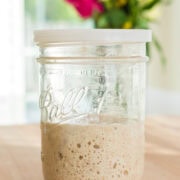
Easy Sourdough Starter Recipe from Scratch
Make this easy sourdough starter from scratch with rye, whole wheat, all-purpose, or bread flour for bread, pancakes, muffins, and much more.
Servings: 1 starter
Ingredients
- rye flour or use whole wheat flour; once starter is established, you can feed with bread flour or all-purpose flour.
- water room temperature not tap water
Instructions
Day 1:
- In a clean mason jar, mix 20 grams of rye or whole wheat flour with 20 grams of lukewarm water (up to 22 grams if needed for hydration).
- Stir well to ensure no dry flour remains.
- Cover the jar loosely with a lid that isn’t airtight.
- Let sit at room temperature for 24 hours.
Day 2:
- Stir your starter well.
- Replace the lid loosely and let sit for another 24 hours.
- Do not feed or add anything.
Day 3:
- Mix the starter and then transfer 20 grams of the starter to a clean mason jar and discard the rest.
- Add 10 grams of rye flour, 10 grams of bread or all-purpose flour, and 20 grams of water.
- Stir until thoroughly combined, making sure to scrape down the sides.
- Cover loosely and let sit for 24 hours.
Day 4-6
- Continue with the same feeding schedule as Day 3.
- Mix the starter and then add 20 grams of starter to a clean mason jar and discard the rest. Add 10 grams of rye flour, 10 grams of bread or all-purpose flour, and 20 grams of water.
- Discard the unused portion of the starter.
- Stir well, scrape down the sides, cover loosely, and let sit for 24 hours.
Day 7+
- Maintain a 1:1:1 feeding ratio (starter: flour: water) until your starter reliably doubles in volume. You can use either all bread flour or all-purpose flour.
- This process takes about 10–14 days. Once your starter doubles in 4–6 hours, feed it every 24 hours or store it in the fridge and feed weekly.
Notes
This process may take around 10–14 days. Once your starter is fully established and actively doubling within 4–6 hours of feeding, you can switch to once-a-day feedings every 24 hours. If you prefer less maintenance, you can also store it in the refrigerator and feed it once a week.
Avoid using the discard in recipes until at least day 10, or once your starter is consistently rising and active. For some starters, this can take up to day 14.
Hydration: If your starter looks too dry or too runny, adjust the water slightly. You’re aiming for a consistency like thick pancake batter. All-purpose flour usually works well with a 1:1 ratio, but wheat or rye flours may need a bit more water to mix properly.
Temperature: A warm environment helps your starter grow faster, while cooler temps will slow things down.
Observation: Keep an eye out for consistent bubbles and a mild, tangy smell — both are good signs your starter is active and healthy.
Storage: Once your starter is strong and established, you can keep it in the fridge and feed it once a week. If you’re baking regularly, you can leave it at room temperature, but plan to feed it every 24 hours.