
Easy Sourdough Starter Recipe from Scratch

This post may contain affiliate links. Please see my disclosure policy for more information.


Make this easy sourdough starter from scratch with rye, whole wheat, all-purpose, or bread flour, ready in 10-14 days for bread, pancakes, muffins, and more.
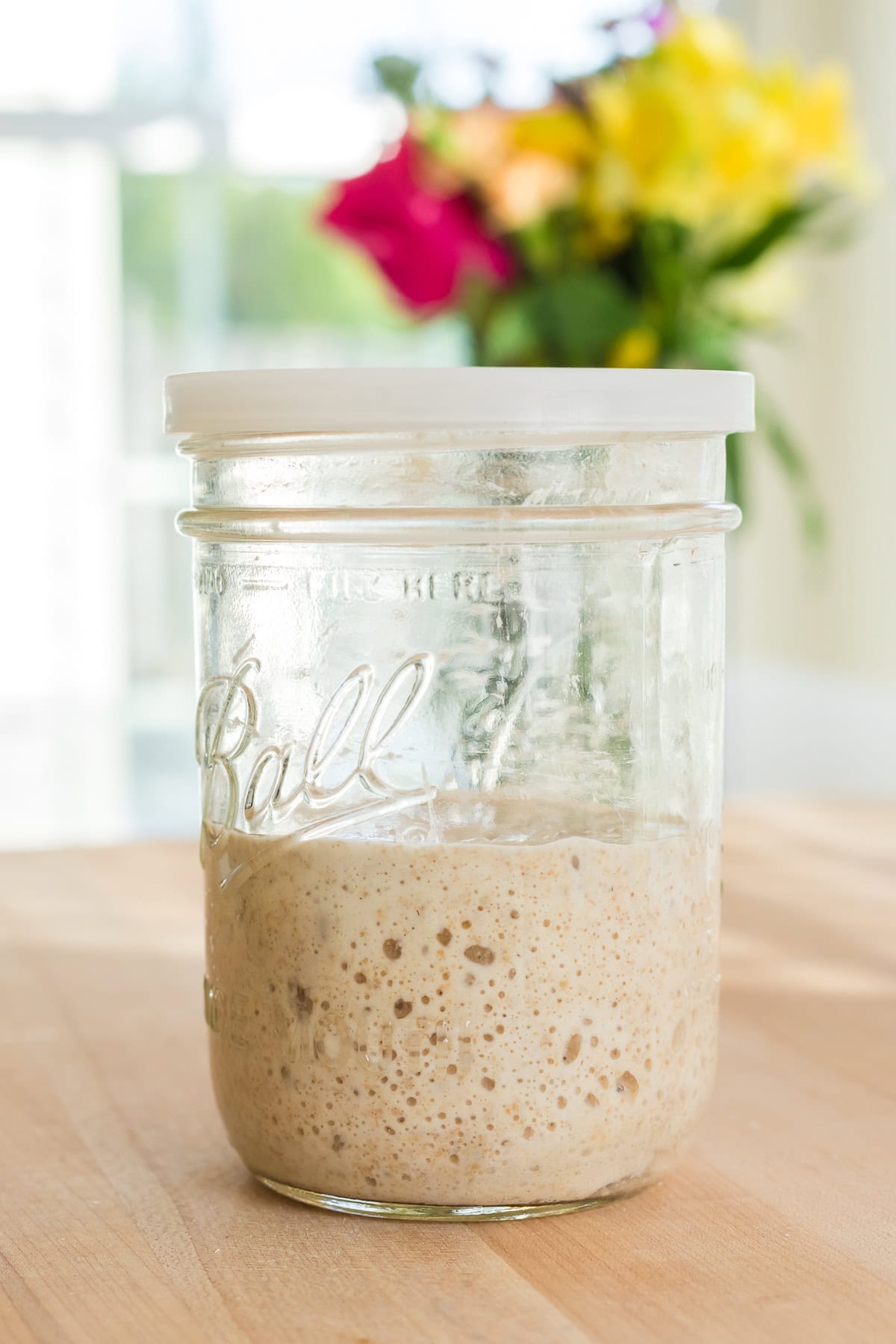
This easy sourdough starter recipe uses rye or whole wheat flour to get things going quickly, then transitions to all-purpose or bread flour. In about 7–10 days, you’ll have a bubbly, active starter ready to make sourdough bread, pancakes, muffins, and more.
I love starting with rye flour because it helps fermentation take off faster and gives my starter an incredible depth of flavor.
Quick Bites About This Recipe
- Flavor: Produces a tangy, slightly nutty, aromatic base for all your sourdough recipes.
- Skill Level: Beginner-friendly with a little patience.
- Swaps: Start with whole wheat flour or bread flour instead of rye if preferred.
- Make Ahead: Once established, your starter will keep for years with proper care.

What is sourdough starter?
A sourdough starter is a mixture of flour and water that harnesses wild yeast and lactic acid bacteria from the environment. By looking after this starter, you’ll grow your own wild yeast, so you won’t have to rely on store-bought yeast unless you prefer to use it for certain recipes.
This living culture ferments over time, producing carbon dioxide gas to leaven bread dough and lending the distinctive tangy flavor characteristic of sourdough bread.
There are lots of options to make sourdough recipes with active starter or sourdough discard like pancakes, cakes, cookies, crackers, muffins, pizza dough, and more. (Do not save sourdough discard until your starter is ready to use, around day 7-14)
I will say, with my recipe, it’s closer to 7 days when the weather is warmer and that’s due to using the rye flour. My husband likes the house colder so that can make it a little harder, keep room temperature in mind too.
Using sourdough starter enhances baked goods’ flavor, digestibility, and shelf life due to its natural acidity, which acts as a preservative by inhibiting spoilage microorganisms. It may also potentially reduce the glycemic index and offer digestive health benefits.

What is the best flour to use for a sourdough starter?
Starting sourdough with whole grain flours like whole wheat or rye is recommended because they contain more nutrients and wild yeast strains.
Rye is particularly favored for its natural amylase enzyme content, which rapidly breaks down starches into simpler sugars. These sugars quickly become the primary food source for the microorganisms in the sourdough starter, expediting fermentation and significantly enhancing flavor and rise in sourdough bread.
This enzymatic action makes rye an excellent choice for sourdough starters and bread-making.
It’s important to use unbleached flour in sourdough starters as it retains more nutrients and natural enzymes, supporting healthier fermentation as well as better flavor development.
Sourdough Starter Ingredients
- Rye flour or whole wheat flour – Packed with nutrients and wild yeast, helping fermentation start quickly.
- All-purpose or bread flour – Used after the first few days to balance texture and flavor. I get it in bulk at Costco or Azure Standard.
- Filtered or dechlorinated water – Best for healthy fermentation and strong yeast activity.
- Clean wide mouth mason jar – Easy to feed, stir, and monitor your starter’s growth. I personally love using ball jars.
- Mini sourdough spatula – For mixing and scraping the jar.
How to make Sourdough Starter
Day 1: 20 g rye or whole wheat flour + 20-22 g lukewarm water = 40-42 g starter
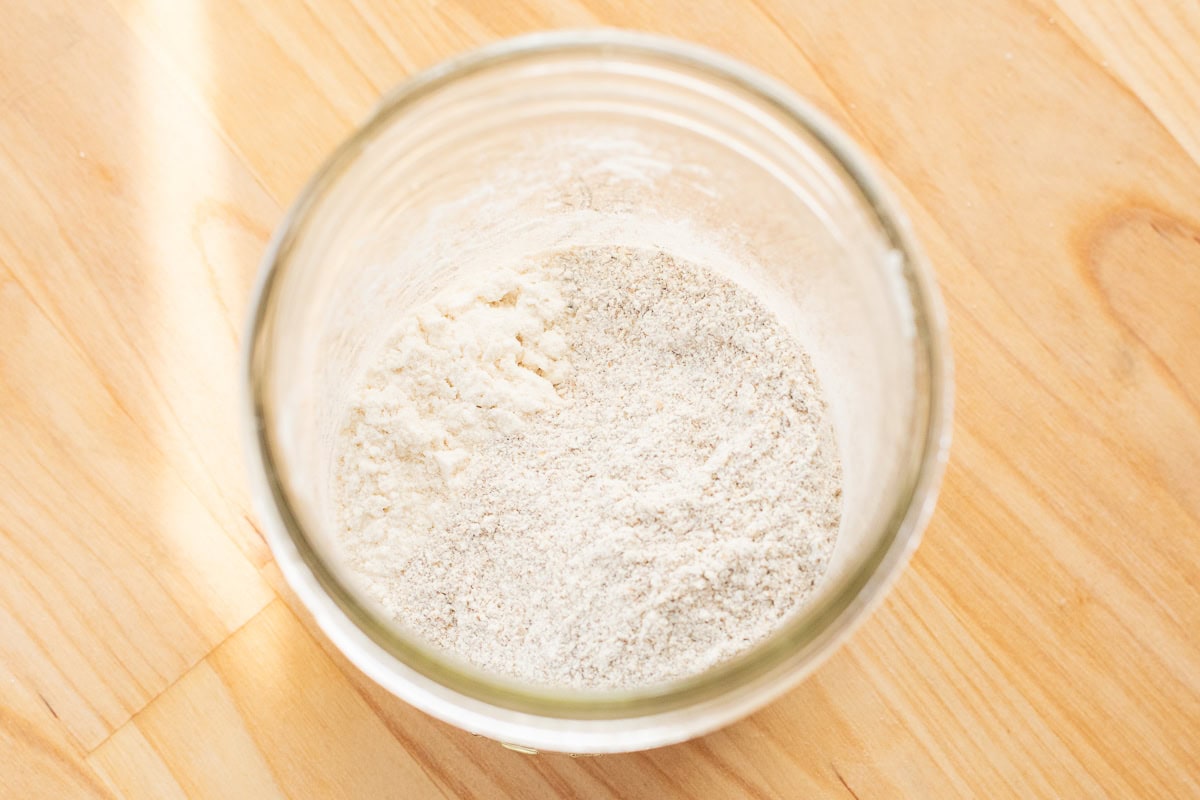
Day 2: Do nothing aside from mix. It may have some bubbly action.
Day 3: 20 g starter + 10 g rye flour + 10 g bread or all-purpose flour + 20 g water = 60 g starter
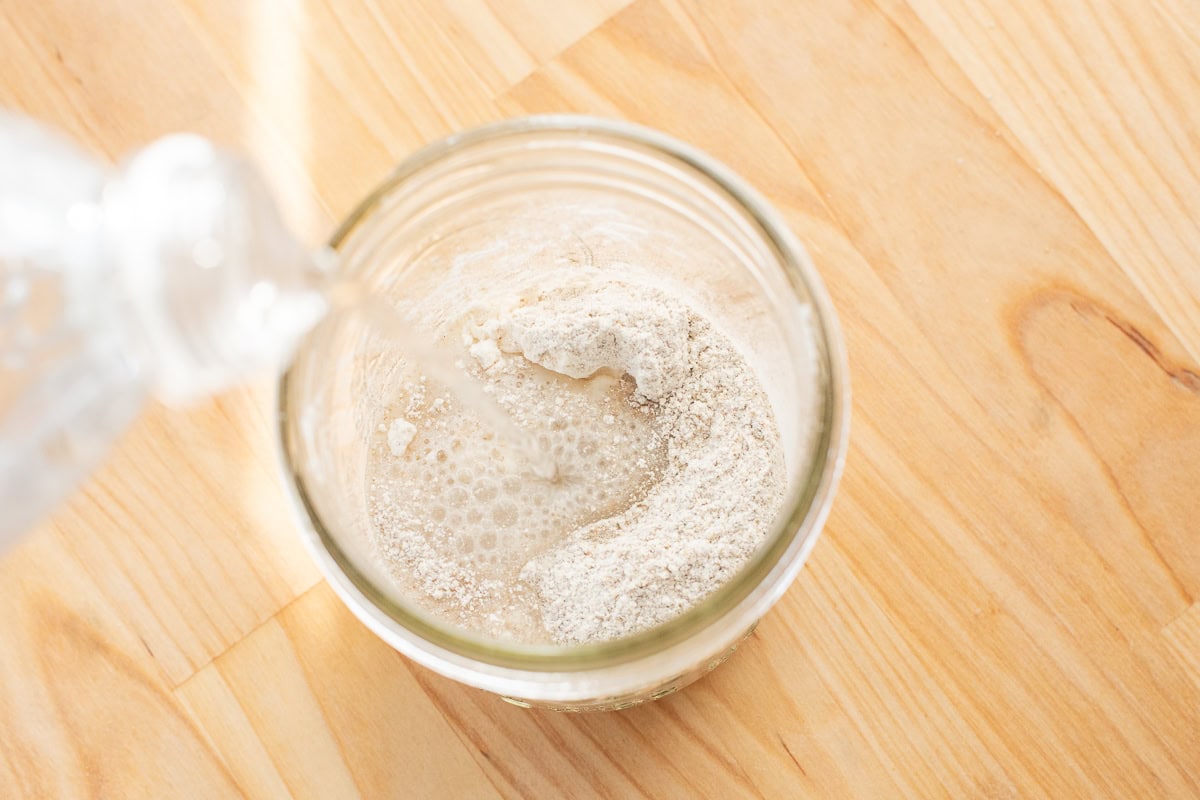
Day 4-6: 20 g starter + 20 g bread or all-purpose flour + 20 g water = 60 g starter (Repeat the same feeding for Days 4, 5, and 6)
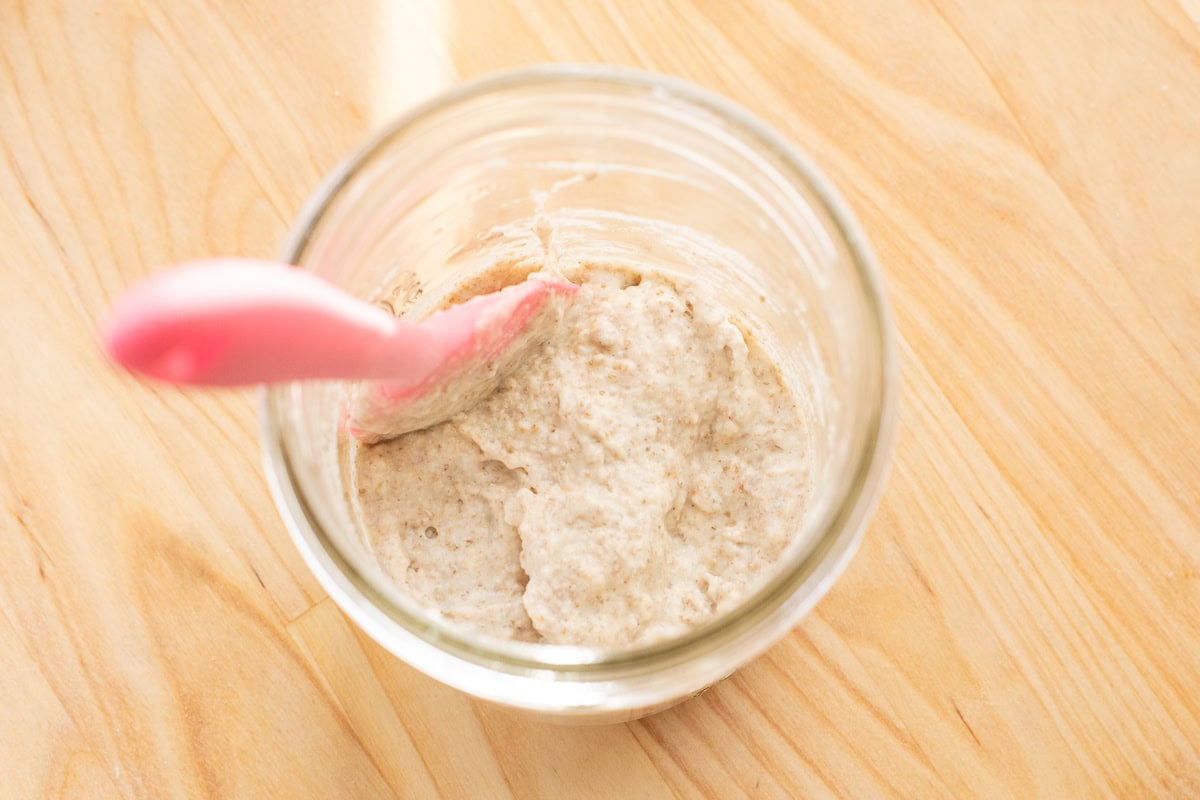
Day 7+: Continue feeding your starter at a 1:1:1 ratio (starter:flour:water) until your starter is reliably doubling in volume. This process may take approximately 10-14 days. Avoid using the discard until day 7-10, and your starter is actively doubling, which may take up to day 14.

Making a small starter
I prefer to start off making a small starter and maintaining a small starter unless I know I’ll be baking a lot and then I can increase the feeding ratios. This reduces waste and ensures I won’t have a ton of discard. You can always increase the amounts later, but I highly recommend starting small while building it.
How to store and preserve sourdough starter
Dehydrate: Dehydrate your sourdough starter by spreading the sourdough starter onto parchment paper on a baking sheet. Place in the oven with the light on. Once fully dry, crumble it up and place in an airtight container.
Refrigerate: Once established, if you don’t bake often, store your starter in the refrigerator and feed it once a week.
How can I make my sourdough bread more or less sour?
Longer fermentation time will increase the sour flavor of your sourdough. You can shorten the proofing time if you don’t want it too sour.
Can sourdough starters go bad?
Yes, toss your starter if you see mold, pink or orange streaks, or smell anything unpleasant. These are signs of harmful bacteria. (I once had to start over because my flour was contaminated with plastic!)
My sourdough starter has a layer of liquid on top. Is that normal?
Yes, this liquid is called “hooch” and is a sign of fermentation. It may be clear, grey, brown or black., it’s an alcoholic byproduct of the fermenting yeast. Just stir it back into your starter before feeding. Do not confuse this with black mold.
Why isn’t my sourdough starter doubling?
Ensure you’re keeping your sourdough starter in a warm area. They also sell warming plates and other gadgets for sourdough starters to speed up the fermentation process. Warmer temperatures speed up fermentation, while cooler temperatures slow it down. We do not recommend using the oven as it can often be mistakenly baked when preheating.
How often should I feed my sourdough starter?
When stored at room temperature, feed your starter at least once a day. If you’re storing an established sourdough starter in the refrigerator, it only needs to be fed once a week.
Why do I need to discard part of my starter?
You may not need to discard at all if you’re using your sourdough starter regularly. You’ll need to discard to keep a manageable amount of sourdough starter and not a ton. You can use the sourdough discard after 10-14 days in recipes.
What should sourdough starter smell like?
A healthy sourdough starter typically has a pleasantly sour, yeasty scent. It may emit an alcohol-like smell when hungry. Initially, the starter might have various, somewhat unpleasant odors, but these lessen as it matures and the beneficial bacteria overtake the bad bacteria.
Is the Sourdough Starter Float Test Accurate?
We don’t recommend it. The float test is where you drop a spoonful of starter into water to see if it floats. This is a quick readiness check, but it’s not always accurate. Signs to know your starter is ready would be; your starter doubles in 4–6 hours, is full of bubbles, and has a domed top starting to flatten.
How to use Sourdough Starter
Sourdough starter is used as a natural leavening agent in place of the commercial yeast you may be used to using. The wild yeast and bacteria help dough rise while adding flavor. An active starter can be mixed into recipes like artisan bread, sandwich bread, pancakes, waffles, muffins, cookies, crackers, pizza dough, and so much more.
Variations & Substitutions
- Gluten-Free Sourdough Starter: Use a gluten-free blend, we prefer using King Arthur Gluten Free Bread Flour
- Flavor + nutrient boost: You can continue feeding with rye flour or wheat flour for a deeper tang and more nutrients.
- Large batch: Double feeding amounts if baking often.
- Keep it small – Maintain a smaller starter to minimize discard and waste.

Recipe Tips and Notes:
- Stick to a regular feeding schedule if you’re not refrigerating your starter once it’s established. You can feed every 12-24 hours.
- Humidity and temperature can affect fermentation. It’s best to keep your starter in a warm area (around 70°F or 21°C) to encourage yeast activity. Cooler temperatures slow down fermentation, while warmer ones speed it up.
- Don’t use unfiltered tap water. The chlorine in tap water can inhibit yeast growth and introduce bad bacteria. Use filtered or dechlorinated water for best results.
- Whole grain flours like rye or whole wheat are excellent for creating a starter thanks to their high nutrient content. Once established, you can switch to all all-purpose or bread flour.
- If your starter seems too thick or too thin, adjust the water and flour amounts. It should look like thick pancake batter.
- Once established, if you don’t bake often, store your starter in the refrigerator and feed it once a week.
- You can use a marker on the outside of your jar, a rubber band, or the markings on a jar to ensure your starter is doubling.

Easy Sourdough Starter Recipe from Scratch

Ingredients
- rye flour or use whole wheat flour; once starter is established, you can feed with bread flour or all-purpose flour.
- water room temperature not tap water
Instructions
Day 1:
- In a clean mason jar, mix 20 grams of rye or whole wheat flour with 20 grams of lukewarm water (up to 22 grams if needed for hydration).
- Stir well to ensure no dry flour remains.
- Cover the jar loosely with a lid that isn’t airtight.
- Let sit at room temperature for 24 hours.
Day 2:
- Stir your starter well.
- Replace the lid loosely and let sit for another 24 hours.
- Do not feed or add anything.
Day 3:
- Mix the starter and then transfer 20 grams of the starter to a clean mason jar and discard the rest.
- Add 10 grams of rye flour, 10 grams of bread or all-purpose flour, and 20 grams of water.
- Stir until thoroughly combined, making sure to scrape down the sides.
- Cover loosely and let sit for 24 hours.
Day 4-6
- Continue with the same feeding schedule as Day 3.
- Mix the starter and then add 20 grams of starter to a clean mason jar and discard the rest. Add 10 grams of rye flour, 10 grams of bread or all-purpose flour, and 20 grams of water.
- Discard the unused portion of the starter.
- Stir well, scrape down the sides, cover loosely, and let sit for 24 hours.
Day 7+
- Maintain a 1:1:1 feeding ratio (starter: flour: water) until your starter reliably doubles in volume. You can use either all bread flour or all-purpose flour.
- This process takes about 10–14 days. Once your starter doubles in 4–6 hours, feed it every 24 hours or store it in the fridge and feed weekly.